Free consultation with a Mesa-area personal injury attorney.
623-632-0959
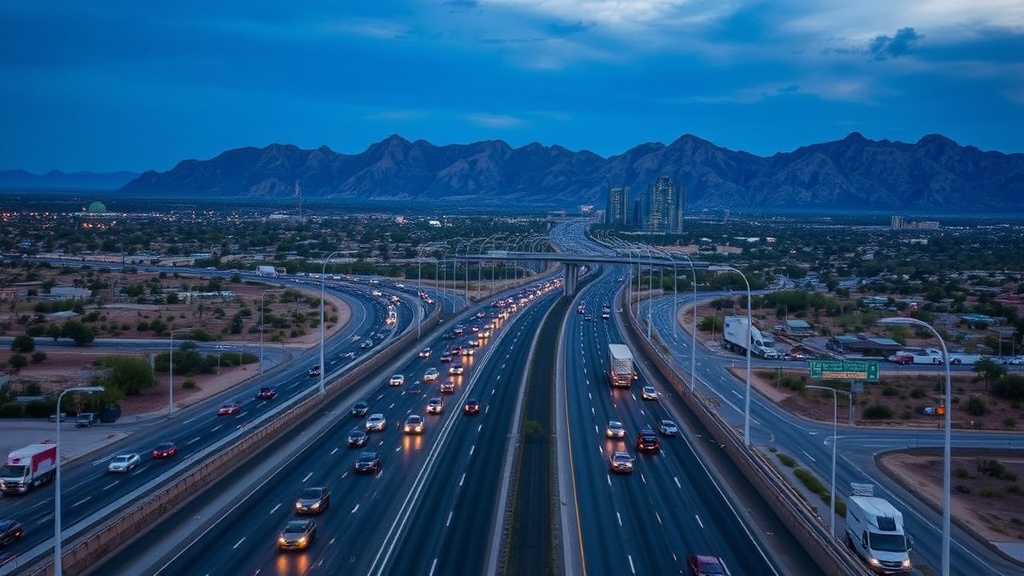
A drunk driver crosses the center line on I-10 outside Phoenix and hits you head-on. The force pushes your vehicle into the next lane and you strike a third car. You go to the hospital. The drunk driver disappears, his insurance company stalls, and three weeks later you get a letter from a lawyer representing the third car’s driver. They are coming after you for medical expenses.
This is the moment most people stop reading their mail and start panicking. It is also the moment you need your own attorney, separate from whichever attorney your insurance company eventually assigns. Here is why.
You can be sued for pushing into another vehicle, even if you were not at fault
In a chain collision, the legal question is not who started the chain. The question is who proximately caused each impact. The third car’s attorney does not have to prove you were drunk, distracted, or negligent. They only have to prove your vehicle was the proximate cause of the impact with their client.
Arizona handles this under pure comparative negligence (A.R.S. § 12-2505). A jury or insurance adjuster apportions fault among the parties: the drunk driver, you, and any other factors (road conditions, vehicle defects, etc.). Your apportioned share could end up at 0% if the drunk driver is 100% the cause. But somebody has to make that argument on your behalf, in writing, with evidence, to the third car’s insurer or to a jury. The insurance company defending you under your liability policy will make some version of that argument. They will not make it as aggressively as you need.
Your insurance company’s lawyer represents the insurer first, you second
Read your auto policy. You will find a “duty to defend” clause. Your insurer is obligated to provide a defense attorney when a third party sues you. The attorney they assign is competent and licensed. But here is the structural problem: that attorney’s client is the insurance company, not you. Their job is to minimize the insurer’s payout. Most of the time those interests align with yours. Sometimes they do not.
Examples of where the interests diverge:
- If your damages from the drunk driver exceed the drunk driver’s policy limits (almost always the case with serious injuries), you have a claim against your own UM/UIM coverage. The insurer defending you against the third party has no incentive to develop that claim aggressively, because it is a claim against itself.
- If the insurer wants to settle the third party’s claim quickly to cap exposure, they may concede liability points that hurt your ability to recover from the drunk driver later.
- If the insurer’s defense lawyer recommends a settlement that exhausts your policy limits, you can be left personally exposed for any judgment above that limit. Bad-faith claims against the insurer are difficult under Arizona law (Zilisch v. State Farm, 196 Ariz. 234 (2000)) without the right factual record, and your insurer’s own attorney is not building that record for you.
Hiring your own attorney to run a parallel track is not paranoid. It is how serious multi-car crash cases get handled correctly. Most personal injury attorneys in Arizona, including Wood Injury Law, will handle this on contingency. You pay nothing out of pocket.
The drunk driver’s policy almost certainly will not cover your damages
Arizona’s minimum auto liability limits under A.R.S. § 28-4009 are $25,000 per person, $50,000 per accident for bodily injury, and $15,000 for property damage. A drunk driver doing 60 mph through a roundabout or crossing into oncoming traffic on I-10 typically has the minimum. $25,000 vanishes the moment you arrive at the emergency room. CT scans, MRIs, orthopedic consults, physical therapy, lost wages. A moderate injury case in Maricopa County usually runs $40,000 to $80,000 in medical bills alone, before pain and suffering.
When the at-fault driver’s policy is exhausted, your recovery comes from:
- Your UM/UIM coverage. Pull your declarations page. If you carry $100,000/$300,000 in UM/UIM, that is your next layer. Arizona requires insurers to offer UM/UIM coverage in writing, and most drivers have it whether they remember selecting it or not.
- Any other defendants. If the drunk driver was on the clock for an employer, the employer’s liability policy is in play. If the crash involved a commercial vehicle, a rideshare in service, or a dram-shop dram (a bar that over-served), additional defendants and policies open up. A.R.S. § 4-311 governs dram-shop liability in Arizona.
- The criminal restitution order. When the drunk driver is convicted of DUI under A.R.S. § 28-1381, the sentencing court can order restitution to victims. Restitution is collectible from the defendant’s wages and assets, but it is slow and rarely covers the full economic loss. It is a backstop, not the main path.
What the criminal case gives your civil case
The drunk driver is being prosecuted. That prosecution generates evidence your civil attorney can use: the police report, BAC test results, dashcam and bodycam video, witness statements, and (if applicable) the field sobriety test results. Brady disclosures and public records requests put all of this in your civil file.
The civil and criminal cases run on different timelines. The criminal case generally moves faster. By the time your civil case is in discovery, you often have a conviction in hand. A DUI conviction does not establish negligence per se in Arizona for the civil case, but it is admissible and powerful evidence.
The two-year clock is running
Arizona’s personal injury statute of limitations is two years from the date of accident (A.R.S. § 12-542). The clock started the day of the crash. Liability “not yet determined” by an adjuster does not toll the clock. The third-party attorney’s letter coming at you does not toll the clock. If your damages exceed the drunk driver’s policy and you have to bring a UM/UIM claim against your own insurer, that claim is also subject to contractual and statutory deadlines.
Most personal injury attorneys want to file suit within the first 12–18 months when liability is clear and damages are still developing. Waiting until month 22 makes everything harder.
FAQ
If the drunk driver gets convicted, do I still need a civil attorney?
Yes. The criminal case punishes the driver. It does not pay your medical bills, lost wages, or pain and suffering. Restitution orders rarely cover the full economic loss. The civil case is how you recover.
The other car’s lawyer is suing me. Should I just let my insurance handle it?
Your insurance is obligated to defend you under your policy. They will assign a defense attorney. That attorney represents the insurer’s interest in minimizing payout, not your interest in maximizing your own recovery from the at-fault driver or your UM/UIM coverage. A separate personal injury attorney protects your side of the equation. The two roles do not conflict.
How long does a multi-car DUI case take in Arizona?
Range: 12 months for clear-liability, moderate-injury cases that settle pre-suit; 18–24 months for cases that require filing suit and going through discovery; 24–36 months for cases that go to trial. Less than 5% of Arizona personal injury cases actually try.
What if my UM/UIM limits are low?
Then there may be no recoverable layer above the drunk driver’s $25,000 minimum policy unless there are additional defendants (employer, dram-shop, etc.). An attorney’s first move is identifying every available coverage layer. Sometimes those are not obvious on the police report.
Will hiring a separate attorney make my insurance rates go up?
No. Your insurer cannot raise your rates because you hired your own counsel to protect interests they do not represent. They can raise your rates based on the at-fault driver hitting you (depending on your policy), but the presence of your own attorney is not a rating factor.
Call 623-632-0959 or visit woodinjurylaw.com/contact to talk with a Mesa-area attorney today.
Related reading: Arizona car accidents | UM/UIM coverage in AZ | Mesa personal injury