Sources reviewed September 1, 2026. This page provides general information, not legal advice.
What Arizona’s device rule actually addresses
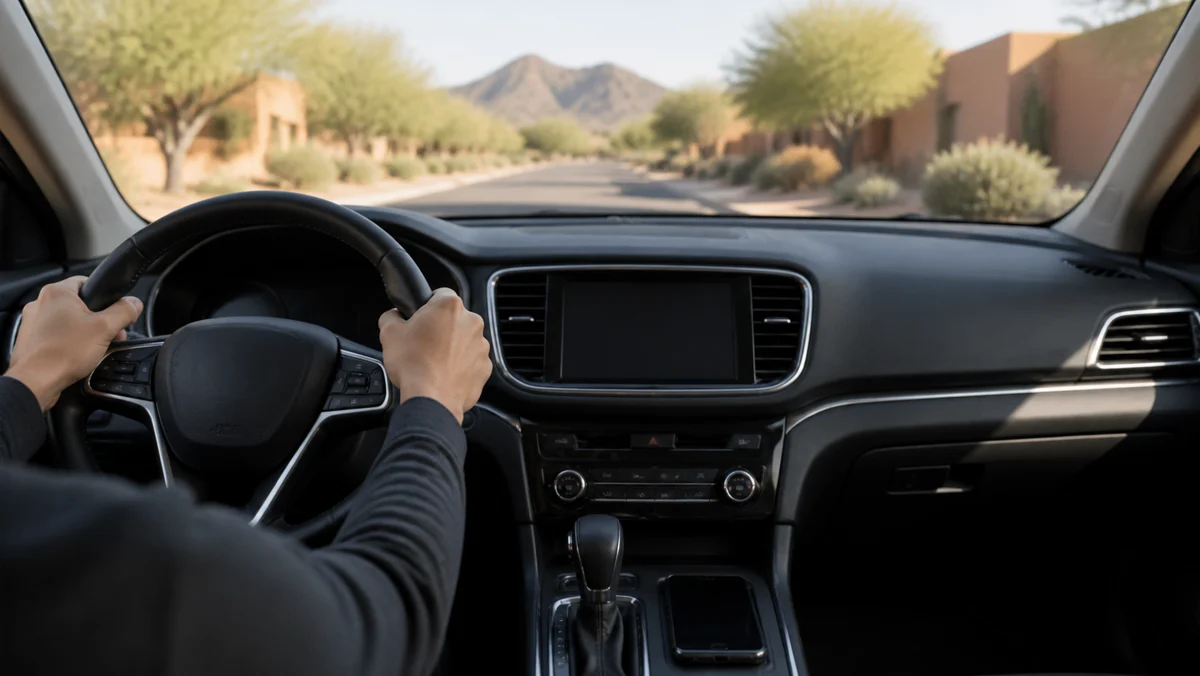
A.R.S. 28-914 addresses use of portable wireless communication devices and stand-alone electronic devices while operating a motor vehicle. The statute says a driver generally may not physically hold or support a covered device with any part of the body. It also restricts writing, sending, or reading text-based communications while driving. The law includes listed exceptions, including certain voice-based and hands-free uses, navigation, and other specifically described circumstances.
That is why a useful account of distraction needs more than an assumption that a phone was present. The details can matter: what was seen, when it was seen, where the vehicles were, whether there were witnesses, what the road conditions were, and which documents exist. This page does not tell anyone how a particular claim will turn out.
What the current Arizona data can and cannot show
The Arizona Department of Transportation’s current annual crash-data resource publishes statewide reports based on reported crashes. In an April 2026 update discussing the 2024 data, ADOT reported 8,537 crashes involving distracted driving and 66 associated fatalities on Arizona roads in 2024. ADOT also cautioned that distraction figures can undercount involvement because a driver may not report it or may be unable to report it.
Those statewide figures are useful context, not proof in an individual matter. A public statistic cannot establish who caused a particular crash, whether a device was in use at a specific moment, or what an individual person’s injuries and losses may be. For the underlying annual publication, see ADOT’s Arizona Motor Vehicle Crash Facts page.
Records that can be useful to preserve
When it is safe to do so, preserve the original records rather than relying on a later summary. A simple dated folder can make a later conversation more precise.
- Original photos and video of the vehicles, roadway, visible damage, and the surrounding scene.
- Names and contact information for witnesses, plus a short factual note about what each person observed.
- Insurance correspondence, claim numbers, repair estimates, rental paperwork, and any written vehicle-valuation material.
- Medical instructions, bills, work restrictions, and work records that exist independently of a claim.
- A personal timeline with the date, time, location, treatment appointments, calls, and documents received.
Do not try to access another person’s phone, account, or private records. A private case review can help identify the legitimate records and questions that may be relevant to the facts already available.
Why the word “distraction” is not the whole analysis
Cellphone use may be one fact among many. A careful review can also involve vehicle positions, sight lines, traffic controls, witness accounts, repair information, medical records, and insurance documents. A statutory restriction does not automatically answer every question about liability, causation, damages, or insurance coverage. Conversely, the absence of a device record does not make other evidence irrelevant.
For a broader crash-information starting point, visit Wood Injury Law’s Arizona car accident resource. It is designed to help people organize the next questions without treating general web content as a substitute for advice about an individual claim.
How to prepare for a useful first conversation
Bring a short timeline instead of trying to tell every detail from memory. Note the date, approximate time, location, vehicles involved, people who may have seen the event, treatment dates, and every insurer or claim number that has contacted you. Keep each document in its original form when possible. A screenshot, letter, estimate, or photograph is easier to discuss when it has a date and a clear source.
It is also useful to separate what you personally observed from what someone else later told you. That simple distinction makes it easier to identify which questions need records and which questions need a fact-specific legal review. It does not require you to prove the entire case before asking for help.
Talk through the documents before making a decision.
If a crash may involve distracted driving, bring the records you already have. A private case review can help you identify the next practical question without assuming what the evidence will show.
Tell us what happened
Share the basic facts and the documents you have. There is no obligation to move forward.
Frequently asked questions
What does Arizona’s distracted-driving statute restrict?
It restricts holding or supporting a covered portable device and reading or writing text-based communications while operating a vehicle, subject to exceptions set out in the statute.
Does a distracted-driving label decide fault after an Arizona crash?
No. The records, witness information, roadway conditions, vehicles, insurance, and injuries still need to be evaluated on their own facts.
What should I keep after a crash that may involve a distracted driver?
Keep original scene media, insurance and repair records, medical and work documents, witness information, and a factual timeline. Do not attempt to access another person’s device or account.