
Call Wood Injury Law for a free consultation. We’ve handled premises liability cases across Maricopa County.
(480) 937-2116
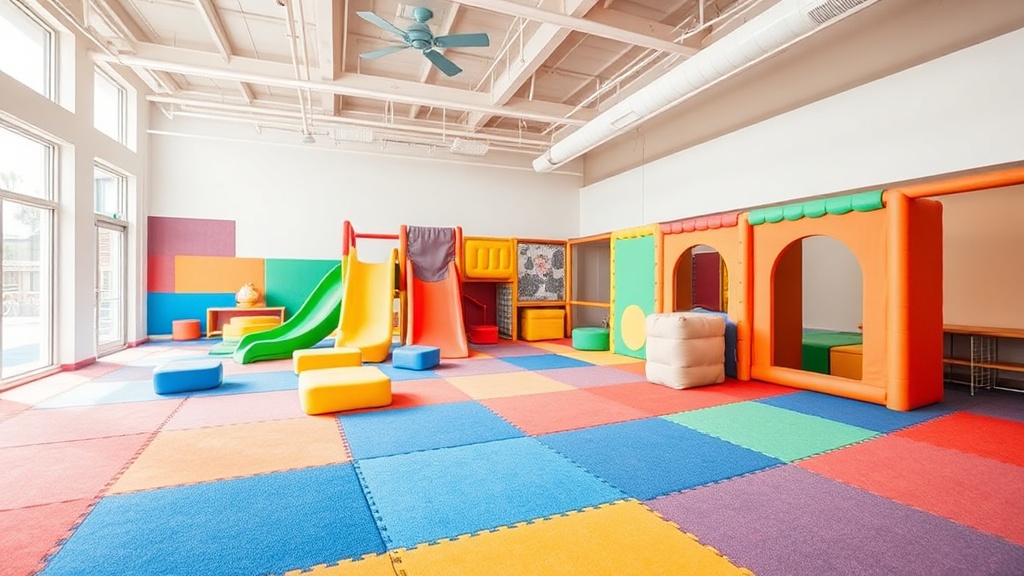
Walk into any indoor play space in Phoenix, Mesa, Chandler, or Gilbert and you’ll sign a waiver before your kid touches the equipment. The waiver feels final. The receptionist hands you a clipboard, points to a line, you sign. Your three-year-old runs off toward the slides and you exhale.
Two hours later your child is in the emergency room at Banner Cardon or Phoenix Children’s with a broken femur, a concussion, or an arm injury that requires surgery. The play space owner is apologetic, then quiet. Your friends say “you signed a waiver, there’s nothing you can do.” The insurance adjuster (when they finally call) repeats the same line.
Here is what the law actually says in Arizona.
The waiver you signed does not bind your child
This is the single most important thing parents need to know after an indoor play space injury in Phoenix, Mesa, Tempe, or anywhere else in Maricopa County. Arizona courts have consistently held that a parent cannot, by signing a pre-injury release, waive the minor child’s own right to sue for negligence.
The leading case is Phelps v. Firebird Raceway, Inc., 210 Ariz. 403, 111 P.3d 1003 (Ariz. 2005), in which the Arizona Supreme Court held that pre-injury releases of a minor’s negligence claims are unenforceable as a matter of public policy. The reasoning: a child cannot consent to assume risks on their own behalf, and a parent’s signature cannot bargain away the child’s separate cause of action.
What this means in practice: the waiver protects the business against your claims as a parent (claims for your own emotional distress, your own lost wages caring for the child, etc.). It does not protect the business against the claim your child can bring for their own injuries, pain and suffering, and future medical needs.
The statute of limitations on a minor’s claim is also tolled. Under A.R.S. § 12-502, the two-year personal injury limitations period for a minor does not begin to run until the child turns 18. That means a three-year-old injured today has until age 20 to file suit. The business and its insurer know this, and they price settlement offers accordingly when a competent attorney is involved.
Premises liability for kids in Arizona: the actual standard
Arizona follows the framework in Restatement (Second) of Torts § 343 for commercial premises liability. A business invitee (your family, paying customers of the play space) is owed the highest duty of care under Arizona law. The business must:
- Inspect the premises for hazards a reasonable inspection would reveal
- Warn invitees of known dangers
- Make the premises reasonably safe for the foreseeable use
When the business markets the space specifically to children six and under (as most indoor play spaces in the Valley do), the standard of care is calibrated to that age group. A slide that’s safe for an eight-year-old may not be safe for a three-year-old. A landing area that’s adequate for older kids may be undersized for toddlers. The business knows the population it invites in, and the legal duty matches.
The smoking-gun evidence in many of these cases is what the business itself did before the injury. If the slide previously had duct tape applied to slow it down, and the duct tape was removed before the visit when your child got hurt, that’s a classic remedial-measure pattern: the business knew the slide was too fast for the marketed age group, took a corrective measure, then removed it. That fact pattern is exactly what AZ premises liability law was designed to address.
The missing incident report is the business’s problem, not yours
Reasonable commercial play spaces have written incident report procedures because their insurance carrier requires them. The carrier wants documentation: what happened, who was on shift, what equipment was involved, what medical aid was offered. If your child was injured and the staff did not fill out an incident report, did not offer first aid, did not bring an ice pack (or brought a bag of ice cubes because they had no proper supplies), that absence cuts against the business in litigation.
During discovery your attorney will demand the business’s prior incident reports for the past two to three years. If those reports show similar injuries at the same piece of equipment, you have a clear pattern of foreseeable harm that the business failed to address. If they show no incident reports despite multiple injuries (because the staff never filled them out), the absence of documentation can be used to establish that the business’s standard procedures were inadequate.
What your case is worth in Maricopa County
Arizona has no statutory damages cap for personal injury cases. A child with a serious lower-extremity fracture, a spica cast for six weeks, learning to walk again, missed school, and ongoing pain is owed:
- All past and future medical expenses related to the injury, including follow-up imaging, physical therapy, and any future complications
- Pain and suffering calibrated to the severity and duration of the injury and the child’s age
- Loss of enjoyment of life during recovery (missed school, missed activities, the burden of immobility)
- Parental damages for lost wages caring for the child, transportation to appointments, and similar out-of-pocket costs (these are your claim, separate from the child’s)
Pain and suffering for a young child with a severe injury in a Maricopa County jury pool is not a small number. The exact value depends on facts: severity, recovery trajectory, whether there are long-term consequences, the strength of liability evidence (the duct tape, the missing incident report, prior similar injuries), and policy limits. A free consultation with a Phoenix-area premises liability attorney is the only way to get a realistic range.
FAQ
I signed a waiver. Doesn’t that end my case?
No, not for the child. The waiver protects the business against your own personal claims as a parent. It does not bind your child’s separate cause of action. Under Phelps v. Firebird Raceway (2005), Arizona courts will not enforce a parent’s pre-injury release of a minor’s negligence claim.
How long do I have to file a claim for my child’s injury in Arizona?
The two-year personal injury statute of limitations under A.R.S. § 12-542 is tolled for minors under A.R.S. § 12-502. Your child has until two years after turning 18 to file. As the parent, your own claim (for example, for lost wages or your own emotional distress) is bound by the standard two-year window from the date of injury.
Will I have to sue the business owner I know personally?
The insurance carrier defends the claim. The business owner is not personally writing checks. The carrier’s adjusters and defense counsel handle settlement negotiations, and most cases resolve without trial. Knowing the owner does not change the underlying legal analysis.
What if the business is a franchise?
Many indoor play spaces in Phoenix and Mesa are franchises (Pump It Up, Sky Zone, Urban Air, Altitude Trampoline Park, etc.). Both the local franchisee and, in some cases, the franchisor can be defendants depending on the corporate structure and the equipment involved. An attorney will identify the correct defendants during the initial investigation.
How much does a Phoenix premises liability attorney cost?
Most Arizona personal injury attorneys, including Wood Injury Law, work on contingency. You pay no fee unless we recover. The standard Arizona contingency fee is 33.3% pre-suit and 40% post-suit, with case costs (filing fees, expert witnesses, depositions) advanced and recovered from settlement. There is no out-of-pocket cost to evaluate your case.
Call (480) 937-2116 or visit woodinjurylaw.com/contact to talk with a Phoenix-area attorney today.
Related reading: Phoenix personal injury | Mesa personal injury | Premises liability practice area