
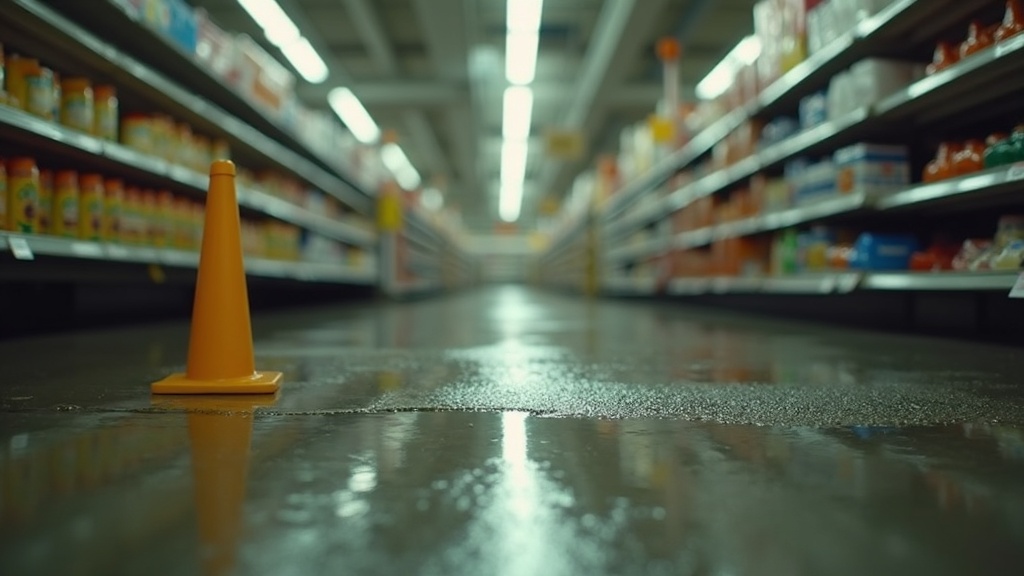
The common assumption is that if you fell on someone else’s property, they are responsible. That is not how Arizona premises liability works, and it is why slip and fall cases are meaningfully harder to win than car crashes.
In a rear-end collision, fault is usually obvious within minutes. In a fall, the property owner is only liable if they knew about the hazard or should have known about it and failed to fix it. That single word, notice, is where most of these cases are won or lost.
What notice means in practice
Arizona recognises two kinds. Actual notice means the owner knew: an employee saw the spill, someone reported it, a work order exists. Constructive notice means the hazard was there long enough that a reasonable owner should have found it during normal inspections.
A jug of milk that broke thirty seconds before you walked past is usually not a claim. The same spill sitting for forty minutes in a busy aisle, with staff walking by, usually is. Nothing about your injury changes between those two scenarios. Only the timeline does.
Why the video matters more than anything else
Most retail and commercial properties record video, and most of those systems overwrite themselves in days rather than weeks. Thirty days is common. Some run seven.
That footage is frequently the only way to establish how long a hazard sat there. Once it is gone, you are left arguing about timing with no evidence, and the property owner has no incentive to help you reconstruct it.
This is the practical reason to act quickly on a fall even when the injury seems minor at first. Ask the manager to preserve the video before you leave, and note who you asked.
The incident report
Ask for one. Businesses of any size have a process, and completing it creates a dated record that the fall happened where and when you say it did.
Keep the description factual. What you were doing, where you were, what was on the floor, whether there was a warning cone. Do not guess at fault and do not minimise how you feel, because “I am fine” written on an incident report tends to reappear months later.
Comparative fault, and why it is not fatal
Property owners routinely argue that you were not watching where you were going. Arizona applies pure comparative negligence under A.R.S. § 12-2505, which means your recovery is reduced by your percentage of fault but never eliminated by it.
Being found twenty percent at fault reduces a recovery by twenty percent. It does not end the claim. That is a more forgiving rule than many states, and it is worth knowing before you accept someone’s assertion that the fall was your own fault.
What actually makes a strong premises case
Photographs of the hazard taken before it is cleaned up. An incident report with a number. Witness names. A preserved video request made the same day. Medical treatment that starts promptly rather than three weeks later. And a clear account of what the hazard was, because “I slipped” is not a case and “there was standing water with no cone next to the freezer” is.
If you were hurt in Arizona, talk to us before you talk to the insurance adjuster. The case review is free and there is no obligation. Call (480) 937-2116
Free Case Review
Share a few details about what happened. There is no obligation to move forward.