You got rear-ended at a red light in Phoenix. The driver who hit you mentions they were “doing a delivery.” Suddenly your case isn’t just against another driver — it’s against a Fortune 500 gig company with multiple insurance layers and a corporate legal team designed to push your claim onto the lowest-paying policy available.
Here’s how Uber Eats, DoorDash, Instacart, Grubhub, and similar gig driver crashes actually work under Arizona law.
The 3-period framework that decides which insurance applies
Every major gig delivery platform divides driver activity into three “periods.” Which period the driver was in at the exact moment of impact determines which insurance policy pays.
Period 0: App off
The driver was not logged into the app. They were driving for personal reasons. Their personal auto insurance applies — usually AZ minimum coverage of $25,000 per person under A.R.S. § 28-4009. The gig company has no liability and no coverage layer.
Period 1: App on, waiting for a delivery request
The driver is logged in but hasn’t accepted a delivery. Most gig companies provide contingent liability coverage in this period: typically $50,000 per person / $100,000 per accident / $25,000 property damage. This layer kicks in only if the driver’s personal policy denies coverage (and many personal policies have ridesharing/delivery exclusions).
Period 2: Delivery accepted, driving to the restaurant
Highest coverage layer. Uber’s commercial policy provides up to $1 million in third-party liability during this period. DoorDash and Grubhub generally match this. Instacart’s policy structure is similar but with some variations on uninsured motorist coverage.
Period 3: Food picked up, driving to the customer
Same $1 million policy as Period 2 on most platforms. Coverage continues until the delivery is marked complete in the app.
Why this matters more than it might sound
If you’re rear-ended by a gig driver and your bills are over $25,000 — which happens often with ER visits, imaging, and follow-up treatment — the difference between Period 0 (personal policy, $25K max) and Period 2 (gig commercial policy, $1M max) is the difference between a heavily limited case and one with adequate coverage to actually compensate your injuries.
The gig companies have every incentive to push your claim onto the lowest-coverage layer that applies. That’s why establishing the correct period quickly matters.
How we establish which period applied
Three primary sources of evidence:
- The driver’s app log. Uber, DoorDash, and the other major platforms keep timestamped records of when a delivery was accepted, picked up, and delivered. Subpoena rights to these records are routine in personal injury litigation.
- The driver’s own statement. What did they tell the responding officer? What did they say to you at the scene? Any acknowledgment of being mid-delivery is relevant.
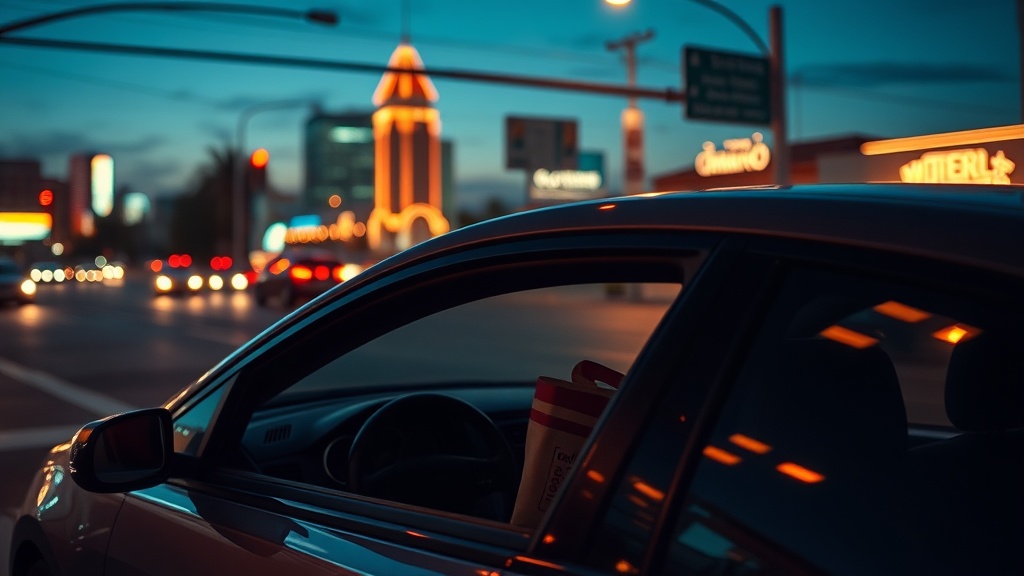
- Physical evidence. Was there food in the vehicle? A delivery bag? Was the GPS visible? Photos at the scene help.
Your own insurance layers also matter
Even with a $1M gig commercial policy on the other side, your own coverage can supplement. Specifically:
Med pay. If you carry medical payments coverage on your AZ auto policy (typically $1,000-$10,000), this pays your medical bills regardless of fault, immediately. You don’t have to wait for the gig company’s adjuster to evaluate liability.
Underinsured motorist (UIM). If your bills exceed even the $1M gig policy (which happens in catastrophic injury cases), your UIM coverage can stack on top.
Uninsured motorist (UM). If the gig driver was somehow in Period 0 and had no valid personal policy, your UM coverage triggers.
The Arizona-specific rules that apply
Standard AZ personal injury rules apply to gig driver cases:
- 2-year statute of limitations under A.R.S. § 12-542.
- Pure comparative negligence under A.R.S. § 12-2505 — even if you’re partly at fault, you can recover.
- Damages include past and future medical bills, lost wages, lost earning capacity, pain and suffering, and in cases involving impaired driving, punitive damages under A.R.S. § 12-543.
Common mistakes after a gig driver crash
Mistake 1: Calling only the driver’s personal insurance. If the driver tells you “I have State Farm” and you call State Farm, that’s the personal policy. The gig commercial policy is separate. You need to identify the platform and pursue the right layer.
Mistake 2: Giving a recorded statement to the gig company’s adjuster early. Their adjusters specialize in establishing that the driver was in a lower-coverage period at the moment of impact. Statements get used against you.
Mistake 3: Settling property damage before evaluating injury claims. Property damage settlements can include language that releases all claims. Read carefully or have an attorney review before signing.
Frequently asked questions
Q: I was a passenger in an Uber/Lyft when we got hit. Different rules?
Mostly the same framework but the rider is the protected party. Period 2-3 coverage applies for the duration of your trip. Both the at-fault driver’s insurance and Uber/Lyft’s commercial policy are typically in play.
Q: The gig driver was driving for two apps simultaneously. Which policy applies?
The platform whose delivery they were actively executing. App logs determine this. If they had two deliveries active at once (rare but possible), both companies’ policies can be triggered.
Q: I’m a gig driver and I got hurt in a crash while delivering. What coverage applies to me?
The other driver’s liability if they were at fault. If you have med pay on your personal policy, that triggers too. Some platforms also provide occupational accident coverage for drivers in Period 2-3 — varies by platform.
Q: Does it matter if the gig driver was driving recklessly or speeding?
Yes — speed and recklessness factor into damages, including potential punitive damages under A.R.S. § 12-543. A police report documenting these is critical evidence.
This is general information about Arizona personal injury law and gig driver crashes, not legal advice for your specific situation. Free, confidential case evaluations are available at Wood Injury Law.