
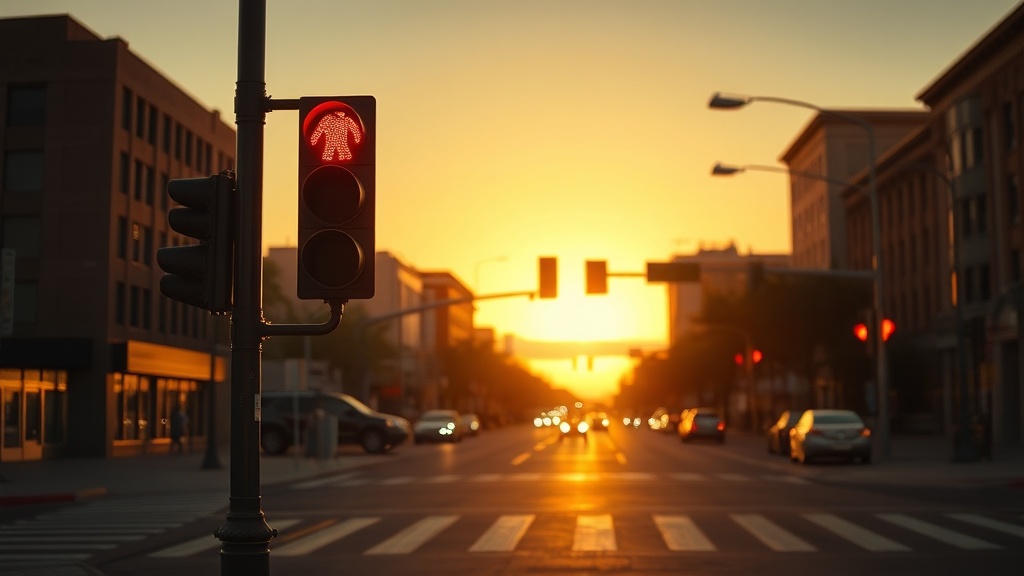
HAWK Signal Crashes in Arizona: The Crosswalk Tucson Invented and the Liability Nobody Explains
Arizona has more HAWK crosswalks than any state in the country. They’ve been linked to thousands of crashes. And almost no other PI firm in AZ has written a serious word about how liability shifts when a HAWK signal is involved.
HAWK signals (High-Intensity Activated crossWalk beacons) were invented in Tucson in 1999 and have spread across the country, but Arizona still has more of them per capita than any other state. They’re the weird-looking traffic signals at mid-block crosswalks that flash yellow, then solid red, then alternating red, then dark again — confusing the hell out of drivers who’ve never seen them.
And confusing drivers are how pedestrians get hurt.
If you were hit at a HAWK signal in Phoenix, Tempe, Mesa, Scottsdale, Tucson, or anywhere else in Arizona, the liability analysis is different from a regular crosswalk crash. Different from a jaywalking case. Different in ways that benefit pedestrians and that adjusters quietly ignore.
How a HAWK signal actually works
A HAWK signal stays dark when not activated. When a pedestrian presses the button, the signal cycles:
- Flashing yellow (drivers should slow down)
- Solid yellow (drivers should prepare to stop)
- Solid red (drivers must stop, pedestrian gets the walk signal)
- Alternating flashing red (drivers must stop, then proceed when clear)
- Dark again (normal flow resumes)
The “alternating flashing red” phase is what trips drivers. They see flashing red and assume they can roll through. But the pedestrian still has the walk signal at that point, and the driver has the same legal duty as at a stop sign — full stop, then proceed only when clear.
This phase is where most HAWK-signal crashes happen.
Why HAWK crashes shift liability heavily toward the driver
Arizona’s right-of-way and crosswalk statutes give pedestrians at activated crosswalks strong protection. When a HAWK signal is in any phase from yellow forward, the driver’s duty is clear:
- Yellow flashing: yield if pedestrians present
- Solid yellow: prepare to stop
- Solid red and alternating red: stop and yield to pedestrians in or about to enter the crosswalk
If a driver hits a pedestrian during any of those phases, the driver has almost certainly violated A.R.S. § 28-792 (right-of-way at marked crosswalks) or § 28-793 (crossing at other than a crosswalk, when the pedestrian was using the marked crosswalk).
That violation is strong evidence of negligence per se. In a comparative negligence analysis, the pedestrian’s fault percentage typically lands very low, often 10% or less, and we’ve seen cases where the jury found the pedestrian 0% at fault.
Compare this to an unmarked mid-block jaywalking case where the pedestrian’s fault might be 50-80%. The HAWK signal completely changes the math.
Hit at a HAWK signal? The liability is on the driver. Call (480) 937-2116.
The “I didn’t see the signal” defense (and why it fails)
Drivers in HAWK crashes routinely tell police, “I didn’t see the lights.” This sounds like a defense. It isn’t.
Drivers in Arizona have a duty of due care, which includes the duty to observe and obey traffic control devices that are visible. HAWK signals are visible. They’re sized to MUTCD federal standards. They’re elevated, lit, and conspicuous when activated.
“I didn’t see them” admits inattention. Inattention is negligence. The defense doesn’t shift liability to the pedestrian; it cements driver fault.
The only defenses with any traction are:
- Sun glare cases (rising or setting sun directly behind the signal at the crash time) — but the driver still had to drive at a speed reasonable for visibility conditions
- Signal malfunction (extremely rare; AZDOT and city traffic departments maintain logs)
- Extreme darkness with broken signal — same logbook check applies
Hit-and-run HAWK crashes and what to do
HAWK signal crashes have a relatively high hit-and-run rate. Drivers panic, especially if they ran the alternating red phase. They drive away.
What you should do immediately:
- Call 911. Get the police report number.
- Note the date, time, exact location, direction the vehicle fled, and any partial plate or vehicle description.
- Look for surveillance — many HAWK signals are at intersections covered by city or business cameras.
- Get medical attention. ER documentation is essential.
- File an animal control report (kidding — but file your police report and get a copy).
- Contact your own UM coverage immediately. UM applies to hit-and-run pedestrian crashes when the vehicle isn’t identified.
The cities with the highest HAWK signal density
Tucson invented HAWK signals, so they’re everywhere there. Phoenix has the most per area. Tempe, Mesa, Scottsdale, and Chandler all have substantial HAWK installations near schools, parks, and transit stops. The crash data isn’t centralized, but ADOT and city traffic engineering departments maintain incident logs.
If you were hit at a HAWK signal, your lawyer should request:
- The signal’s installation and maintenance log from the operating jurisdiction
- Crash history at that specific signal location (often available via public records request)
- Any dash cam, traffic cam, or business surveillance from the area
- The driver’s cell phone records (if a subpoena is justified by case facts)
Frequently asked questions
What’s the deadline to file a HAWK crash injury claim?
Two years from the date of the crash under A.R.S. § 12-542. Hit-and-run cases against your own UM may have shorter contractual deadlines (sometimes 1-2 years from the crash; check your policy).
Can I sue the city if the HAWK signal was malfunctioning?
Possibly. Government claims require a 180-day notice of claim under A.R.S. § 12-821.01. The malfunction must be more than a minor defect, and the city’s prior knowledge of the issue often determines the case.
What if the driver claims I crossed against the signal?
Your legal duty was to use the signal as designed. If you pressed the button and waited for the walk indication, you complied. The driver’s burden is to show you crossed during the wrong phase.
How much are HAWK crash settlements worth?
Wide range. Pedestrian injury values are typically higher than vehicle-on-vehicle because pedestrian injuries are more severe. A pedestrian struck at 35-45 mph is often facing surgery, fractures, or TBI. Settlements between $75,000 and $500,000+ are common for moderate-to-severe HAWK signal pedestrian cases.
The bottom line
HAWK signal crashes are unusual enough that most adjusters don’t have a developed playbook. That’s good for you. The pedestrian-protective traffic law plus the unfamiliarity of the device makes these strong cases when properly prepared.
Free Case Review
We’ve handled multiple HAWK signal cases across Phoenix, Tempe, and Tucson. Call for a five-minute review of your specific intersection.
Related: AZ Pedestrian Accident Lawyer | AZ Right-of-Way Laws Explained