
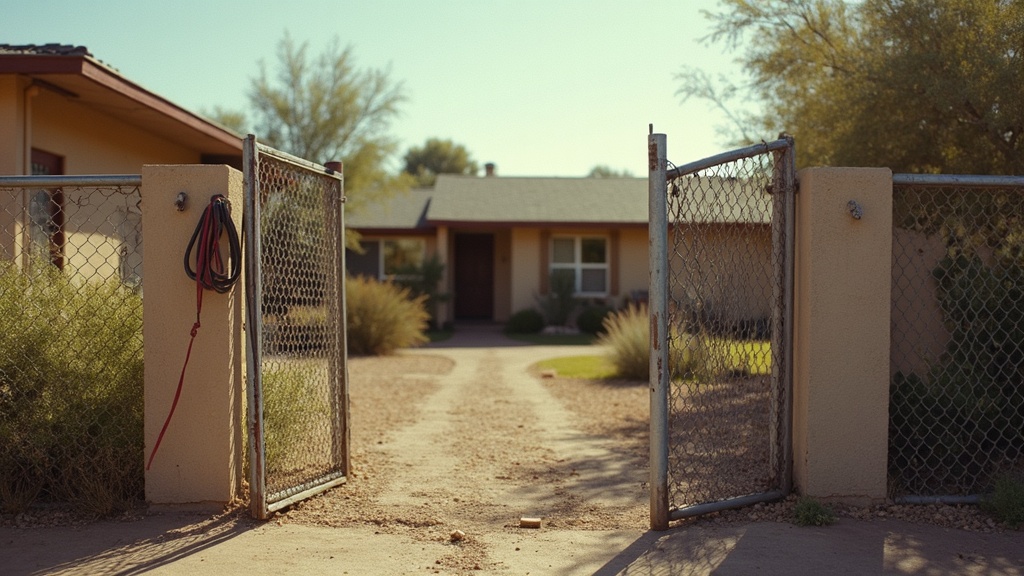
Arizona’s dog bite statute is strict against the owner. A landlord is not the owner, and that is where these cases get complicated, particularly when the owner has no insurance and no assets.
The owner’s liability is strict
Under A.R.S. § 11-1025 a dog owner is liable for a bite regardless of whether the dog had ever shown aggression before. There is no free first bite in Arizona and the owner’s knowledge is not part of the question.
That statute governs the owner. It does not extend automatically to anyone else connected to the property.
The landlord question is about knowledge and control
A landlord may be responsible where they knew, or reasonably should have known, that a dangerous dog was on the property and had the ability to do something about it. Both parts matter. Knowledge without control is generally not enough, and control without knowledge generally is not either.
Knowledge is usually built from documents. Prior written complaints from other tenants. Animal control reports at that address. Emails or texts to the property manager. A lease provision requiring approval for pets, which shows the landlord knew there was a dog. Prior incidents at the same address.
Common areas change the analysis
Where the bite happened matters. Inside a tenant’s own unit, a landlord’s control is at its weakest. In a shared hallway, a courtyard, a laundry room, a stairwell or a communal parking area, the landlord retains control and their duty to keep those areas reasonably safe is much clearer.
The distinction sounds technical and it frequently decides the case, so establishing exactly where the incident occurred is worth doing carefully.
Homeowner policies exclude some breeds
Many homeowner and renters policies exclude specific breeds outright, or exclude any dog with a prior bite. A policy can exist and still not respond, which is a different problem from having no policy at all.
Finding out which applies takes a written request for the declarations page and the exclusions, and it should happen early rather than after months of negotiation with an adjuster who already knows.
Why it matters practically
Most of the time this arises because the tenant has no renters insurance. Homeowner and renters policies commonly cover dog bites, and a tenant without a policy often has nothing collectible, particularly where the injury is serious and involves a child.
The landlord’s commercial general liability policy is then the only meaningful coverage available. That is the practical reason the landlord analysis gets done at all.
What to collect
Photograph the location, including whether it was a common area, and the enclosure, gate, latch and any posted signage. Report to county animal control, because that report creates the record that establishes knowledge for the next person even if it does not help you.
Ask other tenants what they knew and whether they had complained, and get their contact details while they still live there. Request the property management complaint file in writing.
Timing
The general two-year limitation period under A.R.S. § 12-542 applies to negligence claims against a landlord. Arizona’s strict liability dog bite statute carries a shorter one-year period, so the two claims arising from the same incident do not run on the same clock, and the shorter one governs the part of the case that is easiest to prove.
If you were hurt in Arizona, talk to us before you talk to the insurance adjuster. The case review is free and there is no obligation. Call (480) 937-2116
Free Case Review
Share a few details about what happened. There is no obligation to move forward.