Two cars meet at four miles an hour and nobody is quite sure who was wrong. Parking lot collisions look trivial and then turn into some of the most stubborn liability disputes there are, for reasons that have nothing to do with the speed.
Private property changes the evidence
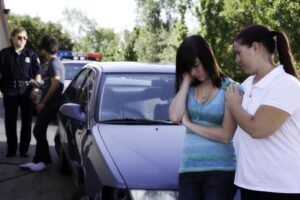
Most parking lots are private property. Police often will not write a full report for a minor collision on private property, and without a report there is no officer’s diagram, no listed witnesses and no independent narrative.
What you are left with is two accounts and whatever you photographed. That is the entire reason these become disputes, and it is why the first ten minutes matter more here than almost anywhere else.
The rules of thumb insurers apply
Through lanes, the main aisles feeding the exits, generally have right of way over the feeder lanes between parked rows. A vehicle leaving a parking space generally yields to one already travelling in the lane. A vehicle backing out generally carries the greater share.
These are starting positions rather than statutes, and they are exactly where adjusters begin. Two cars reversing into each other from opposite bays is the classic fifty-fifty, and it is also the classic case that a single piece of footage resolves entirely.
Arizona fault is apportioned, not assigned
Under A.R.S. § 12-2505 fault is divided as percentages and your recovery is reduced by your share, with no cutoff. So the argument is rarely about whether you have a claim. It is about whether you are at 50% or 20%, and on a low-value property claim those points are the whole negotiation.
The camera almost certainly exists
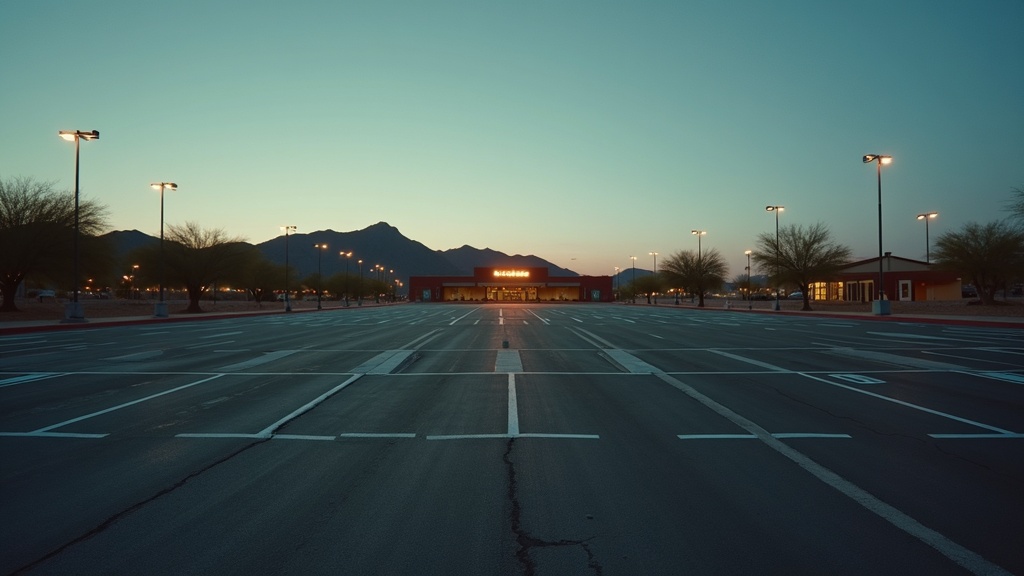
Retail lots, grocery stores, hospitals, apartment complexes and school lots are covered by cameras far more often than people assume. Those systems typically overwrite on a loop measured in days, sometimes as few as seven.
Ask the property manager or store manager in person, that day, and follow up in writing requesting preservation. A verbal request to a shift supervisor who then goes off rota is how most of this footage is lost.
When the property owner is responsible
Sometimes the collision is not really about the drivers. Faded or absent lane markings, overgrown landscaping blocking sight lines, a broken light, a poorly designed blind corner, an unmarked one-way aisle. Premises liability applies to parking areas, and a design or maintenance problem can shift responsibility onto the owner.
Pedestrians struck in parking lots fall into the same category. Sight lines, lighting and marked walkways are the owner’s responsibility, and those cases are frequently more serious than the vehicle-to-vehicle version.
What to do in the first ten minutes
Photograph both vehicles in position before either moves, then the wider lot showing lane markings, signage and any cameras. Get names and numbers from anyone standing nearby, because there is no report to list them on later.
Report it to your own insurer even if it seems minor, and if you were hurt at all, be seen. A low-speed impact producing a real injury is a well-known pattern and it is much easier to document on the day than three weeks later.
If you were hurt in Arizona, talk to us before you talk to the insurance adjuster. The case review is free and there is no obligation. Call (480) 937-2116
Free Case Review
Share a few details about what happened. There is no obligation to move forward.