
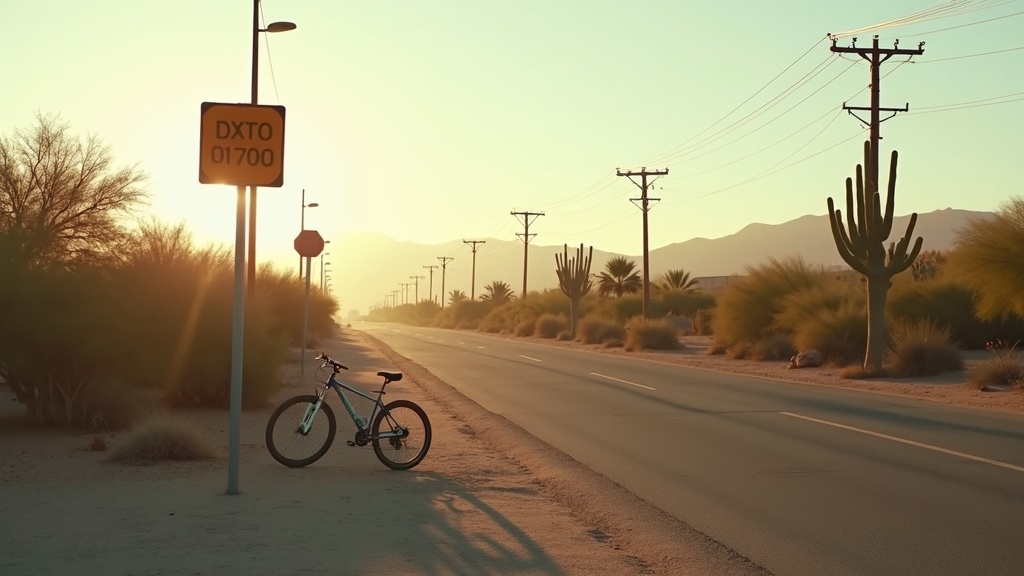
Bicycle Accident in Mesa: The First 24 Hours After the Crash
What you do in the first 24 hours after a bicycle accident in Mesa can determine whether you recover full compensation or walk away with nothing. The steps below are specific, sequenced, and grounded in Arizona law.
Step One — Call 911 and Stay at the Scene
Call 911 immediately, even if the injuries appear minor. A police report is not just paperwork; it is the official record that documents the driver’s information, the conditions at the scene, and the officer’s initial observations about fault.
Under Arizona law (A.R.S. § 28-735), bicyclists on a roadway have the same rights and duties as motor vehicle operators. That means a driver who hits you while you are legally riding may be liable for the same damages as if they had hit another car. But that legal status means nothing without documentation. Do not leave the scene before an officer arrives, and do not let the driver persuade you to “handle it privately.”
Mesa has dedicated bike infrastructure on major corridors including Rio Salado Parkway, Alma School Road, and the area around the ASU Polytechnic campus. If the crash happened in a bike lane, note whether the driver crossed into it, whether signage was present, and whether the lane was clearly marked. All of that is relevant.
Step Two — Get Medical Care Before You Do Anything Else
Go to an emergency room or urgent care immediately after the crash, even if you feel fine. Traumatic brain injuries, internal bleeding, and soft-tissue injuries frequently produce no symptoms in the first hour. By the time symptoms appear, the connection to the crash can be harder to prove.
A.R.S. § 28-814 requires that bicycles ridden at night be equipped with a front white light visible from at least 300 feet and a rear red reflector or lamp visible from at least 300 feet. If the crash happened at night and you had the required lighting, make sure the responding officer notes that in the report. It matters for comparative fault.
Tell the treating physician exactly how the accident happened and document every symptom, even vague ones. “Mild headache” today can become a documented TBI pattern next week — but only if it is in the medical record.
Steps Three Through Six — Preserve Your Claim
After medical care, work through these four actions before the scene changes and memories fade.
Photograph everything. Your bike, your clothing, any visible injuries, the road surface, skid marks, the driver’s vehicle, and any signage or signals in the area. Time-stamped photos taken within the first hour are among the most useful pieces of evidence in a bicycle accident case.
Collect driver information. Name, license plate number, insurance carrier, and policy number. Do not rely on the police report alone — information is sometimes transcribed incorrectly, and having the driver’s insurance card photographed directly removes any ambiguity.
Preserve the bike. Do not repair it, clean it, or have it looked at by a shop. The bike is physical evidence. Bent frames, broken components, and damage patterns can help reconstruct how the crash happened. If an insurer asks you to release the bike for inspection before you have an attorney, decline.
Do not give a recorded statement to the other driver’s insurer. Their adjuster’s job is to minimize the payout. Anything you say before you understand the full extent of your injuries can be used against you. Politely decline and tell them your attorney will be in contact.
Common Mistakes That Damage a Bicycle Accident Claim
Several patterns consistently reduce or eliminate recoveries for injured cyclists.
Posting about the accident on social media is one of the fastest ways to undercut a claim. Defense attorneys and insurance adjusters routinely monitor social media. A photo of you at a friend’s cookout three days after the crash, even if you are sitting in pain, can be used to argue your injuries were not serious.
Accepting a quick settlement is another. Insurers sometimes offer fast, low settlements before the full scope of injuries is known. Once you sign a release, the claim is closed. If you discover a disc herniation or post-concussive symptoms two months later, you have no recourse.
The helmet question comes up in almost every bicycle accident case. Arizona does not require adult cyclists to wear helmets. However, under A.R.S. § 12-2505, Arizona’s pure comparative fault rule, a defendant can argue that not wearing a helmet contributed to a head injury, potentially reducing your damages proportionally. The absence of a helmet does not bar your claim. It means the jury weighs it.
One scenario worth knowing: if a parked car door was opened into your path, the driver who opened the door may be liable under A.R.S. § 28-817. “Dooring” injuries are more common than most people realize, particularly in areas with street parking adjacent to bike lanes.
Arizona’s statute of limitations for personal injury claims is two years from the date of injury (A.R.S. § 12-542). Miss that deadline and the claim is gone regardless of how strong it was.
Injured in a bicycle accident in Mesa or anywhere in Arizona? The first consultation costs you nothing. Wood Injury Law offers a free case review. Call (480) 937-2116. No fee unless we win.
Frequently Asked Questions
Do I need a police report for a bicycle accident claim in Arizona?
You are not legally required to have one, but it is extremely valuable. A police report documents the scene, the parties involved, the officer’s initial observations, and often includes a determination of fault or contributing factors. Without it, the case becomes your word against the driver’s. If officers did not respond to your crash, you can file a crash report yourself through the Arizona Department of Transportation for incidents meeting certain thresholds. An attorney can advise you on whether that is appropriate in your situation.
What if I wasn’t wearing a helmet — does that hurt my case?
It can reduce your recovery for head injuries specifically, but it does not eliminate your claim. Arizona uses pure comparative fault (A.R.S. § 12-2505), which means damages are reduced by your percentage of fault. If a jury finds you were 20 percent at fault for a head injury because you were not wearing a helmet, your recovery for that injury is reduced by 20 percent. For injuries unrelated to head trauma (broken arm, road rash, back injuries), the helmet is irrelevant.
Can I sue if I was doored — a car door opened into me?
Yes. A driver or passenger who opens a vehicle door into the path of an oncoming cyclist without checking first may be liable under A.R.S. § 28-817. Liability turns on whether the person opening the door failed to exercise reasonable care. Evidence such as the police report, witness accounts, and the position of the vehicles is critical in these cases.
How long do I have to file a bicycle accident claim in Arizona?
Two years from the date of the accident under A.R.S. § 12-542. That deadline applies to filing a lawsuit, not to contacting an attorney. Waiting until the deadline approaches creates serious problems: witnesses become harder to locate, memories fade, evidence disappears, and attorneys have less time to investigate. Contact a personal injury attorney as soon as possible after the crash.
Do not wait until the insurance company shapes the narrative. Wood Injury Law offers a free case review. Call (480) 937-2116. No fee unless we win.
This article is for general informational purposes only and does not constitute legal advice. Reading this content does not create an attorney-client relationship. Laws change; verify current statutes with a licensed Arizona attorney before relying on any information here.
Resumen en Español
Si sufriste un accidente en bicicleta en Mesa, lo que hagas en las primeras 24 horas puede hacer la diferencia entre recibir una compensación justa o quedarte sin nada. Aquí te explicamos los pasos más importantes.
Llama al 911 y quédate en el lugar. No te vayas sin un reporte policial. Ese documento es la prueba oficial de lo que ocurrió. En Arizona, los ciclistas tienen los mismos derechos que los conductores de vehículos motorizados (A.R.S. § 28-735), pero necesitas documentación para hacerlos valer.
Busca atención médica de inmediato. Aunque creas que no tienes lesiones graves, las lesiones cerebrales traumáticas y los daños en tejidos blandos pueden tardar horas en manifestarse. Ve a urgencias y describe exactamente cómo ocurrió el accidente.
Documenta todo. Toma fotos de tu bicicleta, tu ropa, tus lesiones visibles, la calle, las marcas de frenado y el vehículo del conductor. Guarda su nombre, número de placa e información del seguro.
No repares tu bicicleta. Es una prueba física del accidente. Tampoco hagas declaraciones grabadas para el seguro del otro conductor antes de hablar con un abogado.
El casco y la responsabilidad. En Arizona no es obligatorio usar casco para adultos, pero si no lo usabas y sufriste una lesión en la cabeza, el seguro puede argumentar que eso redujo tus daños. Esto no elimina tu derecho a reclamar, pero puede reducir la compensación por esa lesión específica.
El plazo legal. Tienes dos años desde la fecha del accidente para presentar una demanda (A.R.S. § 12-542). No esperes. Entre más tiempo pase, más difícil es reunir las pruebas.
Si resultaste lesionado en un accidente de bicicleta en Mesa o en cualquier parte de Arizona, tienes derecho a saber cuáles son tus opciones. Llame al (480) 937-2116. Sin honorarios si no ganamos.