
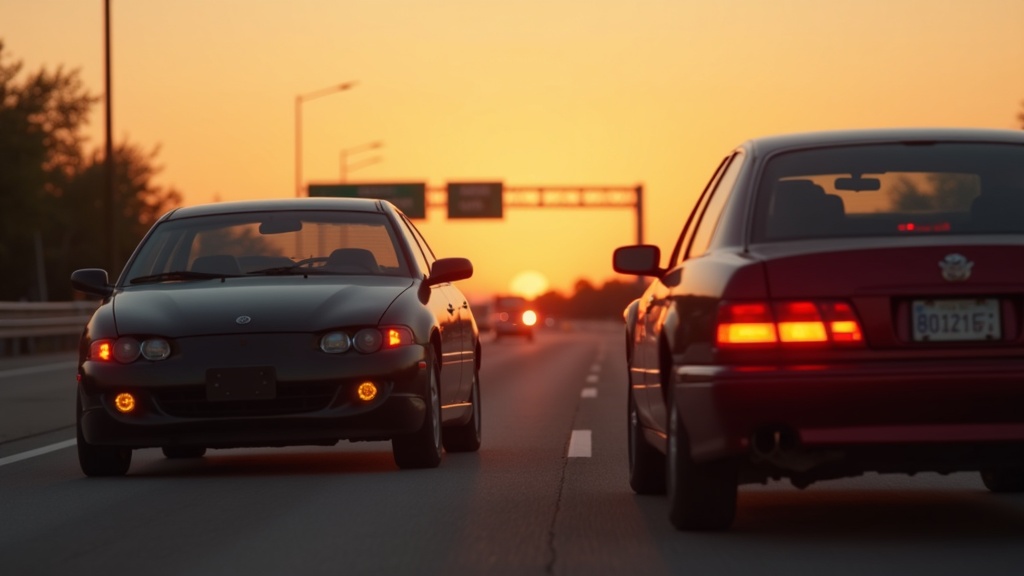
The driver behind you rear-ends your car at a Phoenix intersection. The insurance adjuster on the phone makes it sound automatic: the rear driver is at fault, you’ll be compensated, end of story. Then the offer arrives and it’s roughly 60% of what you expected, with language about “shared liability” or “contributing factors.”
What happened: the rear driver’s insurance is using one of the four Arizona exceptions to the rear-end fault rule. Most drivers don’t know these exceptions exist. Here is exactly how the law works, and when you need to push back hard.
The General Arizona Rule on Rear-End Crashes
Arizona follows the “presumption of fault” rule on rear-end crashes. Under ARS 28-730, a driver is required to maintain a safe following distance, and if they collide with the vehicle in front, there is a rebuttable presumption that the rear driver was negligent. The word “rebuttable” matters. It means the rear driver can present evidence to overcome the presumption.
This is where insurance adjusters live. They look for any fact that might shift fault back toward you, and they argue it whether or not it actually applies.
The Four Exceptions Adjusters Use Against You
1. Sudden, Unexpected Stop Without Reason
If the front driver braked hard for no apparent reason — not for a hazard, not for traffic, not for a yellow light — some Arizona courts have allocated partial fault to the front driver. The classic adjuster argument: “our insured had no time to react because you brake-checked.”
Counter: Arizona drivers brake for many legitimate reasons, including hazards the rear driver couldn’t see. The exception only applies if there was no reasonable reason to stop. Dashcam footage, traffic cam review, or witness statements confirming a legitimate reason (animal in road, pedestrian, sudden traffic change) neutralize this defense.
2. Improper Brake Lights or Vehicle Defect
If your brake lights were out, your vehicle had a known mechanical problem, or you were stopped without hazard lights in a non-stopping zone, fault can shift. ARS 28-939 requires functioning brake lights. A broken lamp could give the rear driver a partial defense.
Counter: pull a vehicle inspection report from after the crash showing brake lights functioning. Most modern vehicles have brake lamp diagnostics in the EDR data.
3. Chain-Reaction (Multi-Car) Crashes
If your vehicle was pushed into another vehicle by a rear impact (you became a “middle” vehicle), the analysis gets complex. The first rear driver is typically primarily at fault, but allocation among multiple drivers is fact-specific.
Counter: the police report and reconstruction document the impact sequence. Get the supplemental report (not the short version) which often contains scene reconstruction notes.
4. Comparative Speed and “Inappropriate Speed for Conditions”
If you were going significantly under the posted speed limit (which Arizona traffic law allows under ARS 28-704 but adjusters may argue against), or if road conditions were poor, the rear driver may argue you contributed to the inability to react.
Counter: ARS 28-704 explicitly permits driving below the posted limit when conditions warrant. The rear driver always bears the obligation to maintain safe following distance under ARS 28-730 regardless of the front driver’s speed.
Rear-ended in Arizona and being told you’re partly at fault?
Wood Injury Law fights rear-end fault allocations every day. Nearly $40M recovered for AZ clients. National Top 100 Trial Lawyers. 4.9 stars from 191 reviews.
What to Do When the Adjuster Claims Shared Fault
- Do not accept the percentage allocation verbally. If the adjuster says “we’re going to put you at 30% fault,” that’s a negotiation opener, not a final decision.
- Request the basis in writing. Ask the adjuster to specify which Arizona exception they’re applying and what evidence supports it. They often back down when asked to commit in writing.
- Pull the full police report and supplemental. If the report shows clean rear-end fault without contributing factors, you have strong evidence.
- Preserve dashcam and EDR data within 30 days. Brake light status, your speed at impact, and brake application timing all matter.
- Identify witnesses. Other drivers who saw the impact often have different recollections than what the rear driver told the police.
- Don’t accept the first offer. First offers on rear-end cases where shared fault is alleged are typically 50-70% of what the case can actually settle for once you push back.
The Comparative Fault Math Under ARS 12-2505
Arizona is a pure comparative fault state. If a jury or arbitrator finds you 20% at fault and the rear driver 80% at fault, you recover 80% of your damages. If they find you 50% at fault, you recover 50%. Unlike New Mexico’s 50% bar, there is no threshold that eliminates your recovery in Arizona.
This is why adjusters fight harder over the percentage allocation in Arizona rear-end cases. Every 10% they can shift to you is 10% of your damages they don’t pay.
Frequently Asked Questions
What is the statute of limitations for an Arizona rear-end accident claim?
Two years from the date of the crash under ARS 12-542. If a government vehicle was involved (a city bus, state vehicle, or municipal employee on duty), a 180-day notice of claim is required under ARS 12-821.01 and the lawsuit must be filed within one year per ARS 12-821.
If I had to brake hard because of debris on Loop 101, can the rear driver argue I caused the crash?
Probably not successfully. Braking for road debris is a legitimate response, and the rear driver is still required to maintain safe following distance under ARS 28-730 regardless of why you stopped. Document the debris if possible (photos, AZDOT records of cleanup) to neutralize the brake-check argument.
My brake light was out when I got rear-ended. Am I now liable?
Partial fault is possible but rarely large. ARS 28-939 requires functioning brake lights, but the rear driver still has primary responsibility under ARS 28-730. Allocation in cases involving a broken brake lamp typically runs 70/30 or 80/20 in favor of the front driver, not 50/50.
I was hit from behind and pushed into the car in front of me. Who pays for which damage?
Typically the rear driver’s insurance covers all damages caused by their negligence, including the secondary impact you caused when pushed forward. Don’t pay the front car’s damages out of your own policy — refer their claim to the rear driver’s insurer.
The adjuster says my injuries are too minor for the impact. How do I prove the medical link?
Get a comprehensive medical evaluation from a doctor who treats car-crash injuries regularly. Causation analysis in the medical record (linking the symptoms to the crash) is critical. Soft-tissue and concussion injuries from rear-end crashes are well-documented in medical literature. The adjuster’s argument that “low impact means no injury” is not supported by current medical science.
Don’t Settle a Rear-End Case Without Knowing the Real Number
Wood Injury Law represents Arizona rear-end crash victims statewide. Josh Wood is a former insurance defense attorney — he wrote the same shared-fault arguments adjusters are now using against you.
National Top 100 Trial Lawyers. Nearly $40M recovered for clients. 4.9 stars from 191 reviews. No fee unless we win.